The main focus when stepping to the plate is hitting the ball beyond reach of the outfielders. When you are about to do this, everything just needs to feel right. Having a batting helmet that spins around on your head is not exactly something you are waiting for. This moves your focus over to your safety instead of the hit. You’ll start worrying more when you are facing a wild pitcher. With so many models and features available, finding the right helmet can feel overwhelming. This guide breaks down what to look for before making your purchase.
They are not just to provide safety to the player when batting, they are also providing protection when a player is standing on the on-deck circle. A batting helmet also comes in handy when a player is running the bases or sliding.
Certification and Safety Standards
In the Baseball Little League it is required to use a batting helmet that has a NOCSAE certification. Most European Leagues have their own requirements. So always check your leagues requirements before buying a helmet to ensure you buy the right batting helmet.
Please make sure you follow the guidelines regarding the batting helmets set by your local league. Also in 99 out of 100 cases a batting helmet is required before you are allowed to play. The main reason behind this is protection. Baseball is fun but also dangerous. Make sure you take the safety precautions very serious before walking on the diamond.
Material and Features
Almost all quality batting helmets are made from ABS Thermoplastic and internal padding for shock absorption. Depending on the helmet there are several features like
moisture absorbing pads, extra airflow, and better ventilation. These features can be helpfull when playing long or hot games, helmets with these features help to keep you cool and dry during the innings.
There are also a couple of extras you can buy with your helmet, the first one are ear guards. These so called ear guards can have c-flaps on both sides of the helmet that fully covers the ear and jaw of the batter. These guards provide protection at all times, so not just when you are on the plate. Your hearing will decrease with both of your ears covered but at least you’ll still have them after the game is done. On some helmets the c-flap is integrated, on the latest helmets the c-flaps are
detachable so you can choose for you self if you want extra jaw protection. If both of these guards are not required in your league and you want to go for a single flap ear, make sure you cover your ear that faces the pitcher.
The second feature are
faceguards. This depends on the manufacturer which helmets support a faceguard for extra safety. A disadvantage of these faceguards is that they can obstruct the vision of the batter while on the plate. When you decide you want a facemask in the end, make sure you
buy one from the same manufacturer as your helmet.
Maintenance
Batting helmets are made to give the batter a lot of protection against pitches that come flying in at +- 110 K/MH. It is only natural that a helmet wears down after a while. Something that
speeds up this process is when a player
throws it down in the dugout or onto the field. We know it looks cool but it doesn’t bring you anything. So be cooler and keep your helmet on a rack or on the bench until you’re on-deck.
You also want to protect your helmet from the
sun. The sun causes the padding on the inside to
harden and crack. Make sure to keep the helmet inside and inspect it every time before you are going to use it.
Sizing
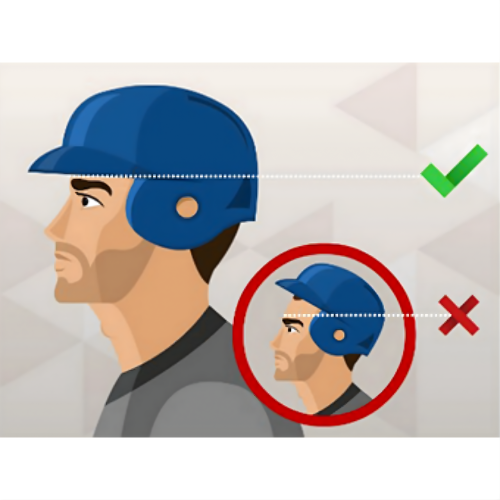
A batting helmet size is not easy to determine. The manufacturers can use different measurements. You should see the process of buying a batting helmet like when you’re buying a hat.
Find the right measurements of the circumference of your head and translate it to the closest size available.