


180.95
In stock
Buying Guide
Last updated: 15 September 2025 | 4 min read

Are You Buying Your First Baseball Bat? Before stepping onto the field, it’s important to choose the right baseball bat for your playing style and skill level. This guide will walk you through everything you need to know—such as sizing, materials, weight, certifications, and bat styles—so you can confidently select the perfect bat.
Think about it—how can you hit a home run without a bat? That’s why it’s one of the most essential pieces of equipment for any player. But picking the right bat can be more challenging than you expect. There are many things to consider, like bat length, weight, material, and the league rules. The right bat not only fits your body but also matches your level of play.
Check League Requirements First
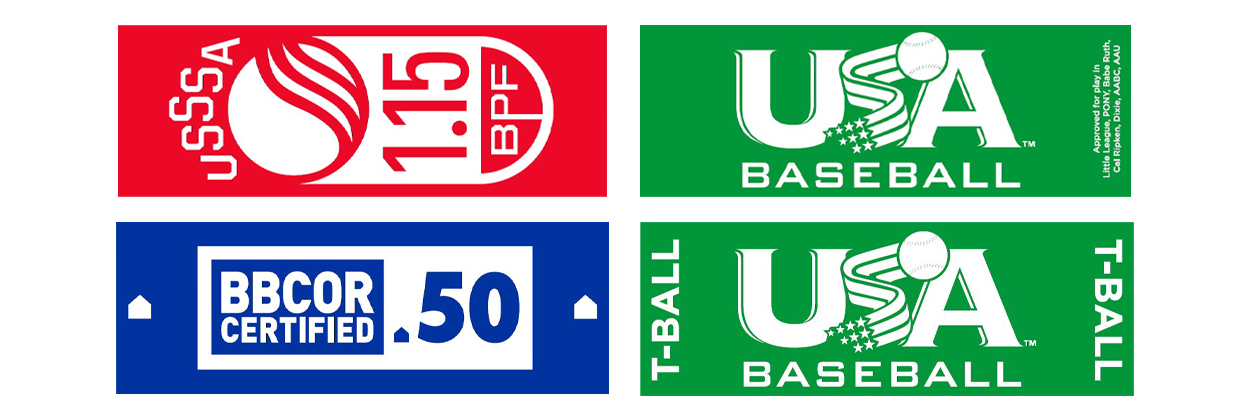
Before buying, check the rules of your local league or ask your coach for advice. Every league follows specific bat regulations, and using the wrong bat could make you ineligible to play. You’ll often see bats stamped with one of these certifications:
There are also Senior League bats, which are designed as a transition between youth and BBCOR bats.
Age Guidelines (General Rule):
Always look for the logo stamp on the barrel to ensure your bat meets the proper standard.
Bat selection chart
| Your Weight (kg) | Your Height (cm) | |||||||||
|---|---|---|---|---|---|---|---|---|---|---|
| 100 | 110 | 120 | 130 | 140 | 150 | 160 | 170 | 180 | 180+ | |
| Less than 28 | 26" | 27" | 28" | 29" | 29" | 30" | 30" | |||
| 28 - 32 | 27" | 27" | 28" | 29" | 30" | 30" | 31" | |||
| 33 - 36 | 28" | 28" | 28" | 29" | 30" | 30" | 31" | |||
| 37 - 41 | 28" | 28" | 29" | 29" | 30" | 30" | 31" | 32" | ||
| 42 - 45 | 28" | 28" | 29" | 30" | 30" | 31" | 31" | 32" | ||
| 46 - 50 | 29" | 29" | 29" | 30" | 30" | 31" | 31" | 32" | ||
| 51 - 54 | 29" | 29" | 29" | 30" | 30" | 31" | 31" | 32" | 33" | 33" |
| 55 - 59 | 29" | 29" | 29" | 30" | 30" | 31" | 32" | 33" | 33" | |
| 60 - 64 | 29" | 29" | 30" | 30" | 31" | 31" | 32" | 33" | 33" | |
| 65 - 68 | 30" | 30" | 30" | 31" | 31" | 32" | 33" | 33" | ||
| 69 - 73 | 30" | 31" | 31" | 32" | 32" | 33" | 33" | 33" | ||
| 74 - 77 | 31" | 32" | 32" | 32" | 33" | 33" | 34" | |||
| 78 - 82 | 32" | 32" | 33" | 33" | 34" | 34" | ||||
| 82+ | 33" | 33" | 34" | 34" | ||||||
Most popular length by age
| Age | 5 - 7 | 8 - 9 | 10 | 11 - 12 | 13 - 14 | 15 - 16 |
|---|---|---|---|---|---|---|
| Length | 24"/26" | 26"/28" | 28"/29" | 30"/31" | 31"/32" | 32"/33" |
How to Measure the Right Bat Length
Getting the correct bat length is key for good swing mechanics and plate coverage. A bat that's too long can slow you down, while one that’s too short may limit your reach.
Three Ways to Check Bat Length:
If you're not sure, use a size chart as a general guide and test these methods for better accuracy.
Finding the Right Bat Weight
The bat should feel balanced in your hands. If it feels too heavy, your swing may slow down or drop during motion.
Weight Test: Hold the bat straight out to your side for 30 to 45 seconds. If your arm starts to drop or shake, the bat is probably too heavy.
Understanding Drop Weight:
Drop weight = Bat length (in inches) – Bat weight (in ounces).
Example: A 30-inch bat that weighs 20 oz has a drop weight of -10.


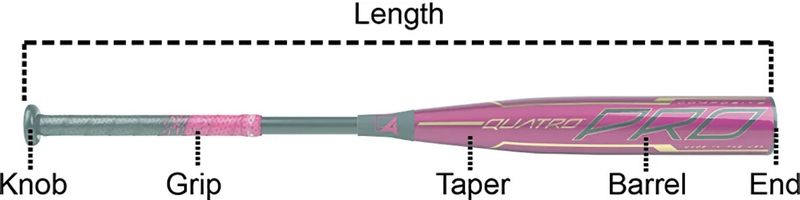
In the picture you can see the anatomy of a baseball bat. This is very important before buying a bat. All the different parts have a function on their own:
One-Piece vs. Two-Piece Bats
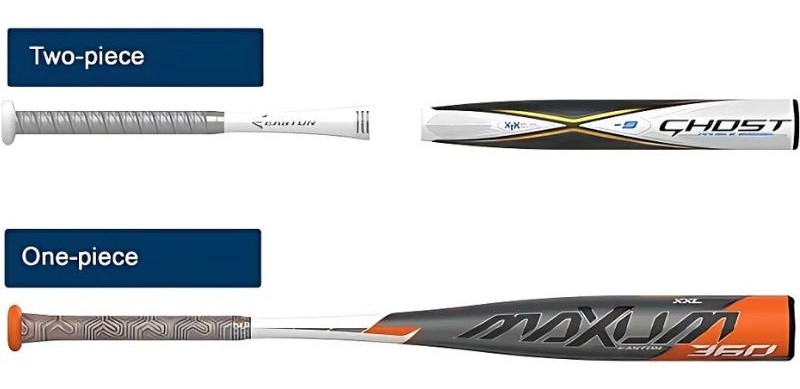
One major decision is choosing between a one-piece and a two-piece bat:
Choose a two-piece bat if you want more comfort and less sting. Choose a one-piece for power and a solid feel.
Alloy (Aluminum) Bats
